
Anna's dream of a safe life remained unfulfilled.
Born on March 23, 1885, in Babiak, Koło County, Poland.
In 1919, she left Łódź, Poland, and moved to Fulda to begin a new life. Anna Berkowicz initially worked as a domestic servant before assisting her husband, Baruch, a tailor, in his business. Both were stateless and lived amidst legal and social uncertainty as they struggled to secure a stable existence.
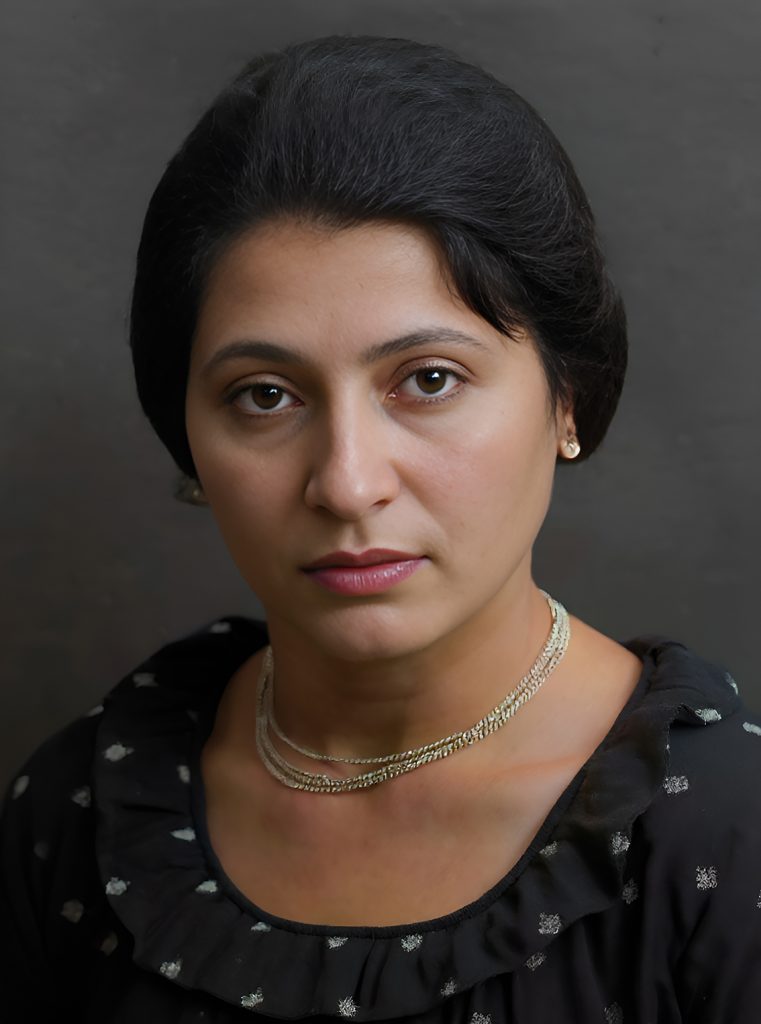
Strong Together
Anna married Baruch on February 10, 1932. During these difficult years, they lived at various addresses, including Rosengasse 1 and later Mittelstraße 31, where they stayed with the Nussbaum family. When the Nussbaums moved to Frankfurt in January 1941, Anna was left alone.
Escape to Olkusz
On January 30, 1940, Anna wrote to the Foreign Exchange Office (a Nazi agency that demanded forced payments from Jews), stating that she had no income of her own and was being supported by the Jewish community. In February 1941, she left Fulda and presumably moved to Olkusz, to live with relatives at Marktstraße 27. In September 1941, the Germans established a ghetto in Olkusz. In June 1942, Anna was presumably deported to Auschwitz. Here her trail goes cold.
From October 1919 to 1941, Anna lived at many addresses in Fulda:
Vordere Schleifersgasse 7 (at Mrs Schmitt’s)
Vordere Schleifersgasse 11
Hintere Schleifersgasse 18 (at Ludwig Ziegler’s)
Sack 1 (at Maier’s)
Florengasse 27 (at Berkowicz)
Ohmstraße 14 (at Nagler)
Rosengasse 1 (since July 1933)
Mittelstraße 31 (with the Nussbaum family, since March 1940)
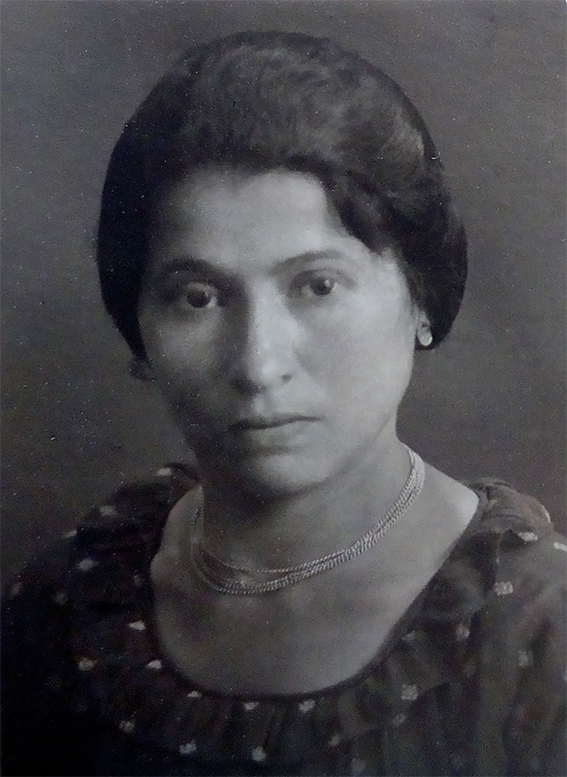
Based on the original photograph shown, all depictions have been reconstructed using artificial intelligence.
Origins and Early Years
Anna Berkowitz, née Bechler, exemplifies the complex lives of Eastern and Western Jews in the early 20th century. Born in March 1885 in Babiak, Kolo district, then part of Russian Poland, she grew up in a modest Jewish family whose members mostly earned their living as merchants and craftswomen. Little is known about her early childhood, but her later life reflects the challenges faced by many Eastern European Jews.
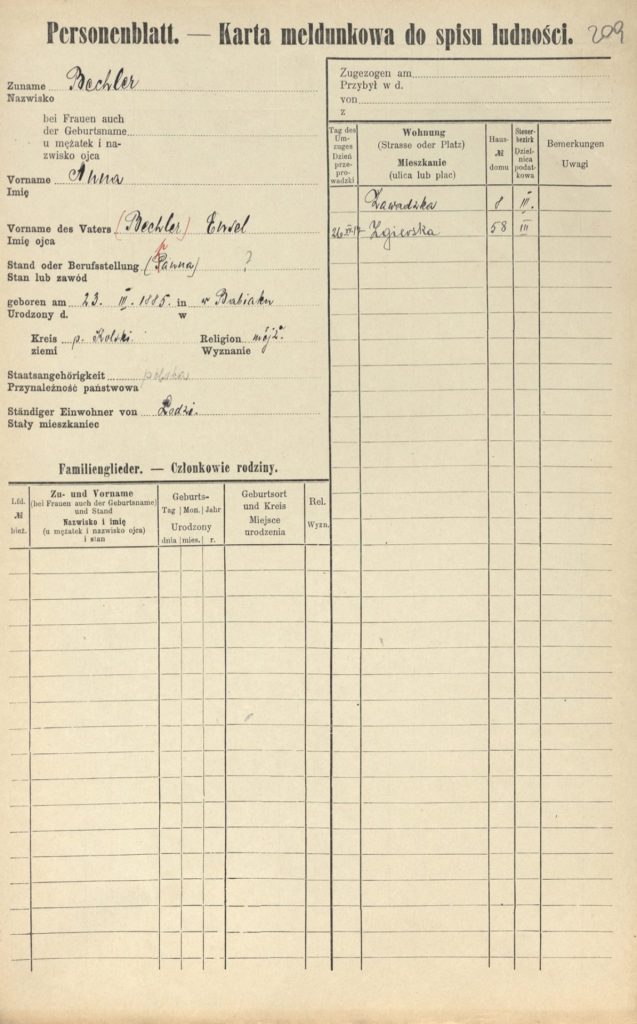
Registration card from Łódź, 1917
Eastern and Western Jews – Two Worlds – One Identity
The term “Eastern Jew” refers to Jews from Eastern Europe who migrated to Germany or Austria, primarily after the First World War. They differed significantly culturally and religiously from the so-called Western Jews – those Jewish communities that had been firmly rooted in Western countries for generations. Eastern Jews often spoke Yiddish, frequently practiced stricter religious observances, and were generally economically disadvantaged. These differences often led to prejudice and social exclusion by the established Western Jewish community.
In contrast, Western Jews often had better economic circumstances, were more assimilated, and adapted more culturally to the majority society. Nevertheless, both groups shared a deep connection to Judaism and the common goal of survival and preserving their identity under difficult circumstances.
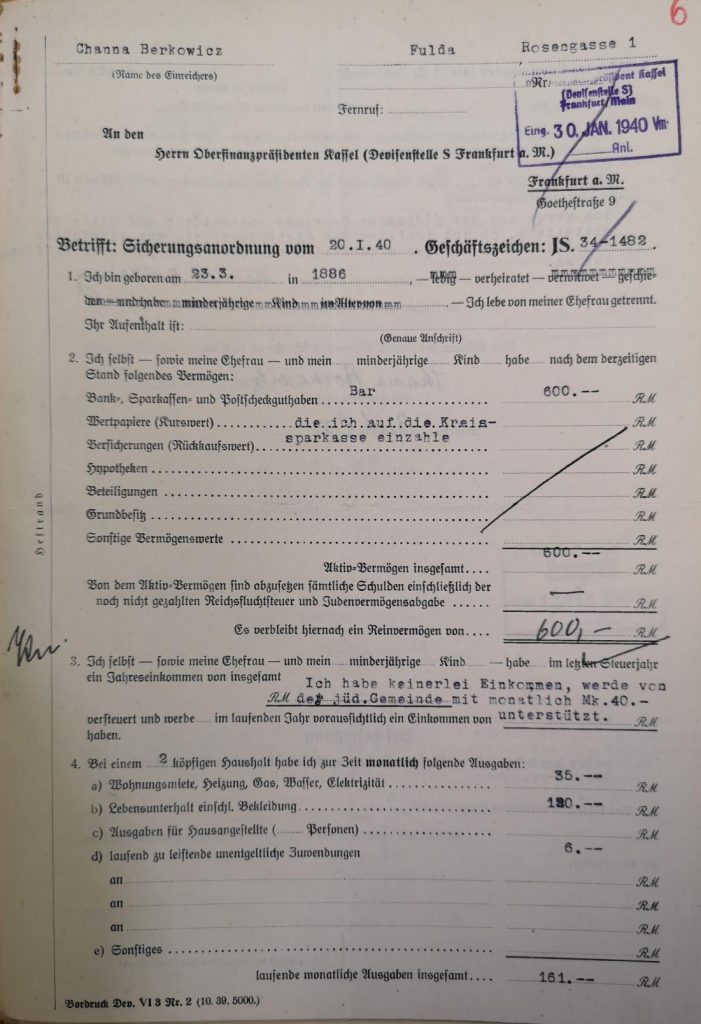
Anna had to report to the Nazi regime that she had no money and was being supported by the Jewish community., 1940
A New Life in Fulda
Anna moved to Łódź in 1917, a city marked by war, political upheaval, and growing antisemitism. Seeking safety, she eventually relocated to Fulda in western Germany – a move common among many Eastern European Jews seeking better living conditions. Here she met Baruch Berkowitz, also a migrant from Poland with a similar background. Their connection symbolizes the solidarity within this community despite all adversity.
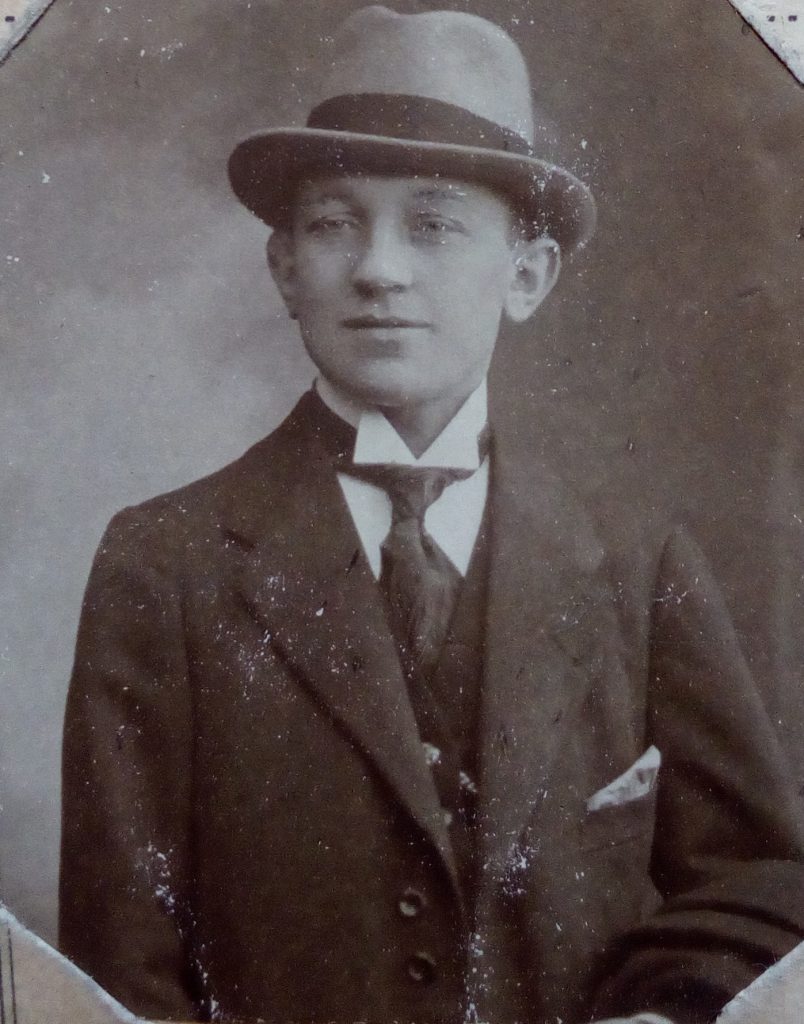
Baruch Berkowicz, 1918
Life in poverty
Anna’s life was marked by insecurity: frequent moves to simple rented apartments reflected the precarious existence of many Eastern European Jewish migrants. The Nazi takeover dramatically worsened her situation; poverty and isolation increased. Baruch was deported in 1940; Anna followed him to Olkusz in occupied Poland in 1941 – presumably, she met her death there under horrific circumstances in Auschwitz.
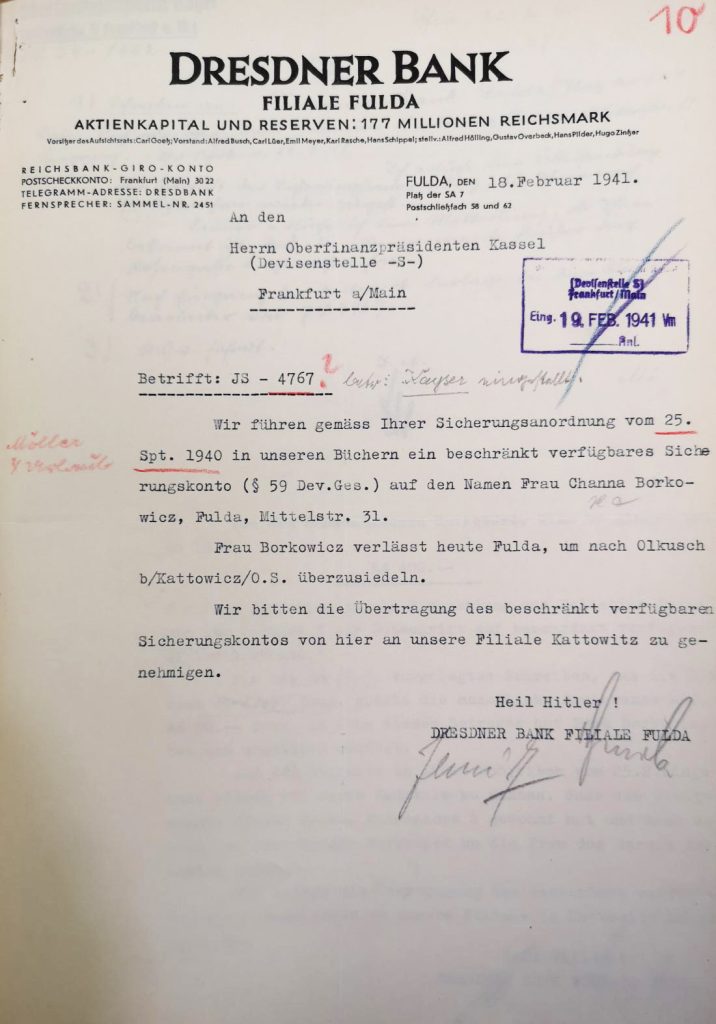
Uninterrupted persecution by the Nazi regime and Dresdner Bank, 1941
Despite all their differences, Eastern and Western Jews share a history full of suffering, hope, and resilience. Anna’s life powerfully demonstrates how important it is to preserve these stories.