
As a young widow, Lina provided for her family and livelihood on her own.
Born on April 24, 1881 in Gelnhausen.
Her father, Jakob Goldschmidt, ran a leather goods shop in Gelnhausen. At the age of 27, Lina met Julius Flörsheim, also 27, from Flieden at an arranged meeting. The meeting was successful: they married on October 25, 1908.

Success and tragedy
In 1909, the couple moved to Fulda, opened a dry goods store with Lina’s dowry, and had three children. The youngest died of scarlet fever a few days after birth. Lina also fell ill and suffered the consequences for the rest of her life. In 1917, Julius Flörsheim was killed in France during the First World War. For three years, Lina tried to keep the business going, but had to sell it in 1920. She eked out a living for the next few years with her widow’s pension and by selling everyday items.
Addresses in Fulda:
› Kanalstr. 55
› Schildeckstr. 7
Escape attempt and deportation
In 1936, she and her sister Rosa Goldschmidt left Fulda and moved to Frankfurt. Her children, who had fled to Palestine, tried unsuccessfully to enable Lina to emigrate as well.
On November 22, 1941, she was deported from Frankfurt to Kaunas, Fort IV, where she was murdered on November 25, 1941.
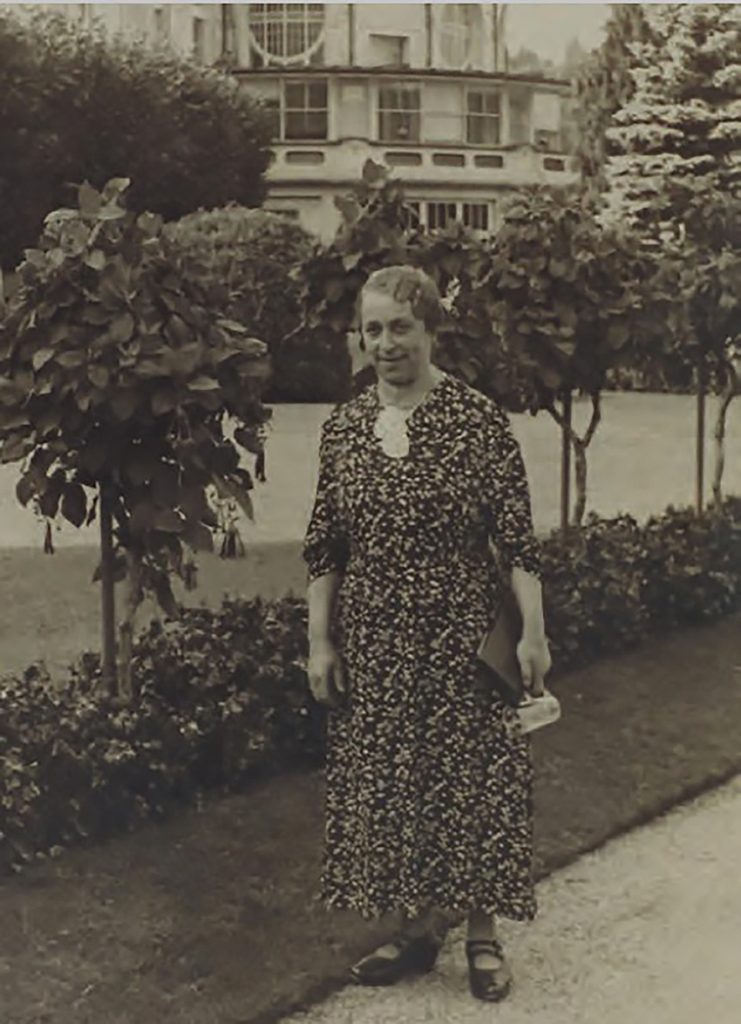
Based on the original photograph shown, all depictions have been reconstructed using artificial intelligence.
A new beginning in Fulda – hope and tragedy
Lina was born in Gelnhausen in 1881. In 1908, she married Julius Flörsheim, and a year later they moved to Fulda, where they opened a haberdashery shop together. The couple had three children, but their youngest child died a few days after birth – a terrible loss for the young family. Julius Flörsheim was one of around 100,000 Jewish Germans who fought for ‘Reich and Fatherland’ in the First World War. Around 12,000 of them were killed in the war, including Julius.
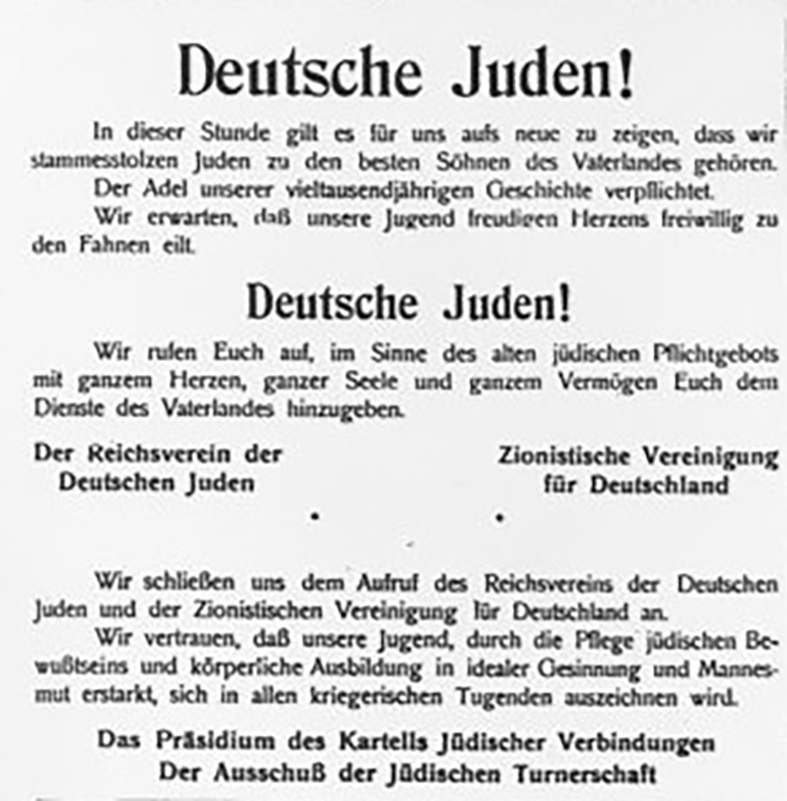
Call in the *Jüdische Rundschau* for volunteers to come forward, 1914
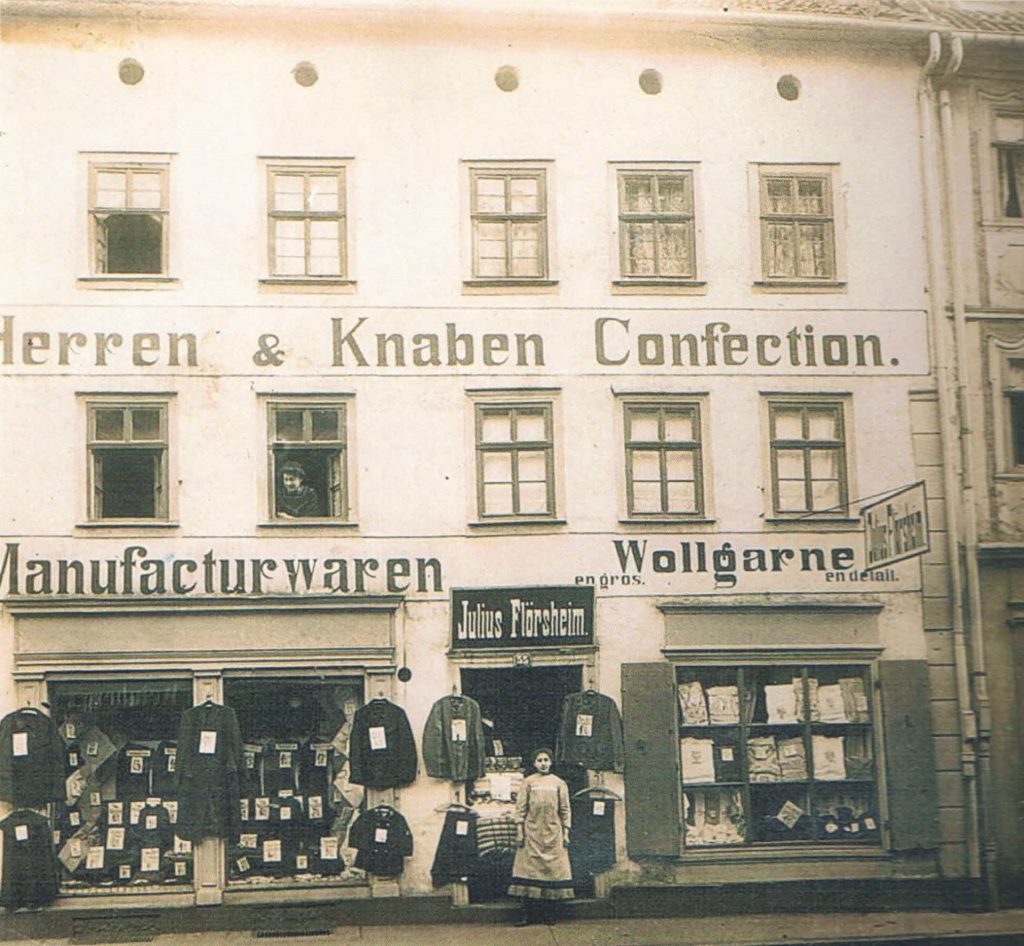
Flörsheim Clothes Shop – Lina looks out of the window
The First World War – A Soldier Torn Between Fear and Duty
The war left deep scars – not only on the battlefields, but also within families back home. In a field postcard from the merciless battlefield of Verdun, Julius wrote to Lina in 1916: “Here I have walked the same route more than eight times under heavy fire. May God grant that none of my children ever have to go through this.” These words reflect the fear, suffering and worry of a soldier who feared not only for his own life, but above all for that of his family.
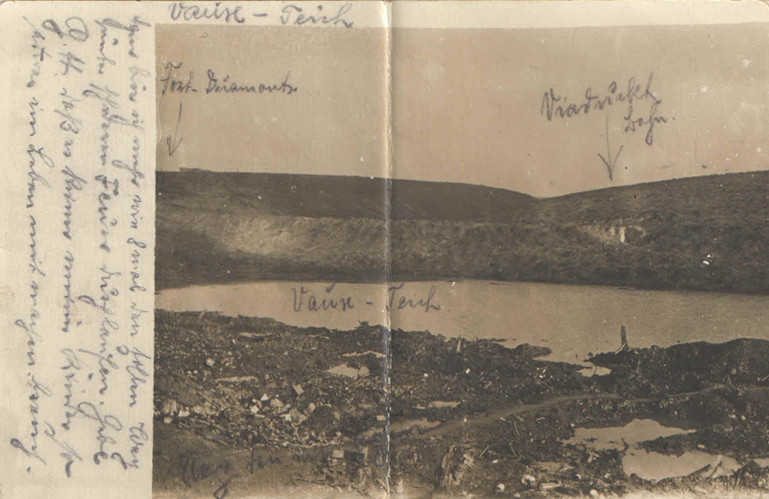
Field postcard from Julius to Lina, sent from Verdun, France, 1916
Alone in Fulda – The Struggle for Survival
In 1917, Julius was killed in the war. Lina was left behind in Fulda as a young widow with her two small children. With only her sister’s support, she faced enormous challenges. Without a family network and in such difficult times, Lina was forced to give up the family business. From then on, she lived off the income from a small shop and did everything in her power to secure a better future for her children. Despite the adverse circumstances, she ensured that both children were able to attend secondary school – a great achievement at a time when education was not accessible to everyone.
The Children's Escape
Both children managed to flee Germany in time, thus escaping the mounting horror of Nazi persecution. Despite all attempts to save their mother, Lina was deported and murdered in Kaunas. Lina Flörsheim’s life story is emblematic of the many women who, under difficult circumstances during that period, coped with the challenges of daily life, came to terms with their losses, and yet found the courage to fight for their families.
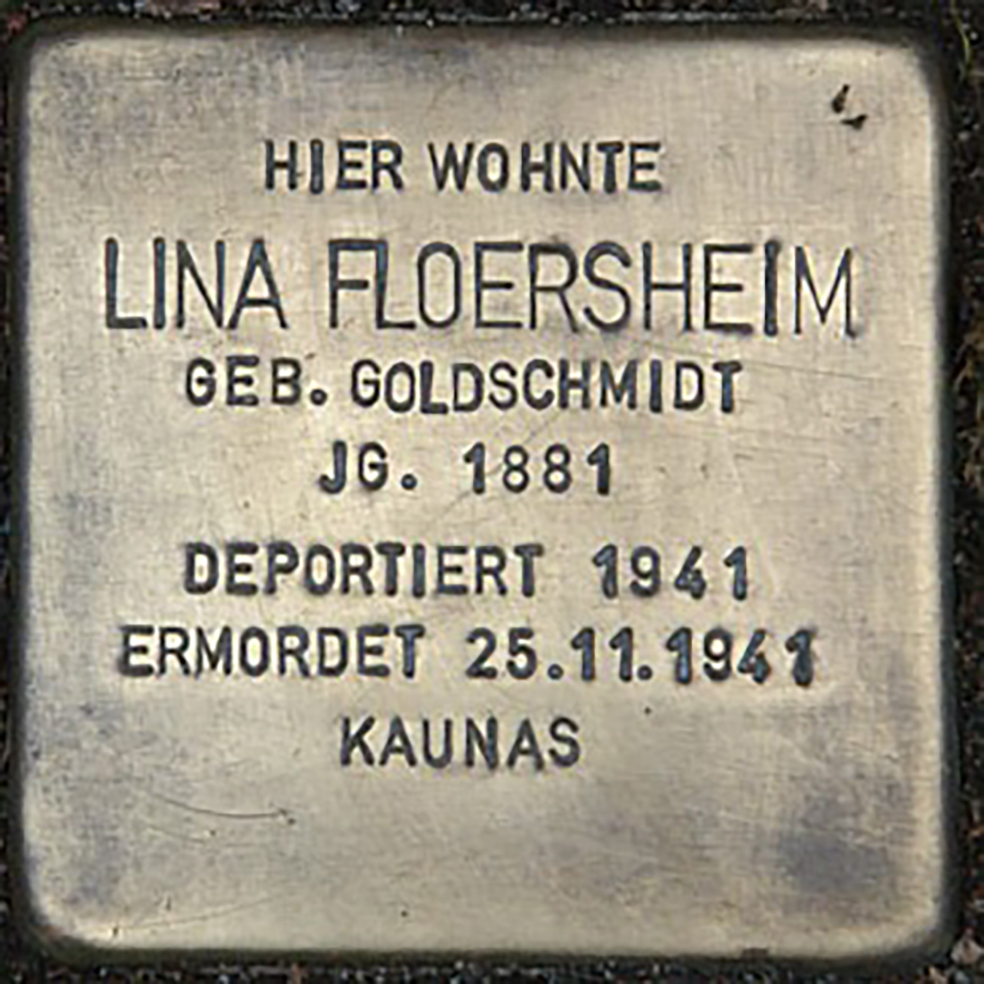
A Stolperstein for Lina in Gelnhausen, where she last lived
Their fate serves as a reminder of how closely personal tragedies and historical events are intertwined – and how important it is to keep the stories of these women and families alive.