
For over 40 years, Michael shaped religious life as a rabbi.
For over 40 years, Michael shaped religious life as a rabbi.
Rabbi Dr. Michael Cahn attended elementary school in Rüdesheim and secondary school in Mainz. He studied at the rabbinical seminary in Berlin and Strasbourg. In 1874 he received his doctorate in philosophy, and in 1876 he received his rabbinical diploma in Berlin.
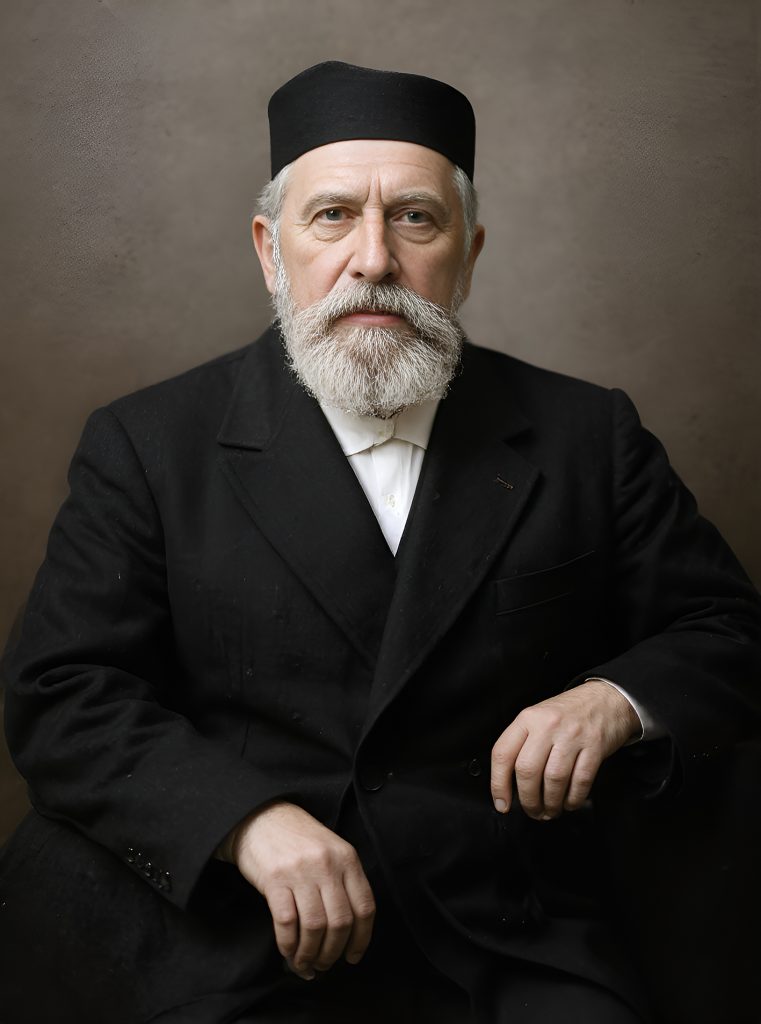
Leading figure of German Orthodoxy
From 1877 to 1919, Michael served in Fulda as provincial rabbi. He was a leading figure in German Orthodoxy. His scholarly arguments made him known throughout Germany, and he played a crucial role in preventing a ban on ritual slaughter. In 1891, he published a memorandum on ritual slaughter and the sale of kosher meat.
Torah school and mikveh
In 1899, at his initiative, the Torah school Beth Hamidrash was founded in the tradition of Rabbi Maharam Schiff. In 1902, he issued regulations for the use of the new mikveh in Fulda, which opened that same year.
In 1902/03, the so-called Rabbi’s Villa was built at Schildeckstraße 12 according to plans by the architect Karl Wegener.
Rabbi Dr. Michael Cahn died on January 1, 1920.
Addresses in Fulda:
› Rittergasse 3
› Schildeckstr. 12 (since 11 March 1903)
From Rüdesheim to Fulda
Michael Cahn was born on 10 August 1849 in Rüdesheim. After completing his schooling in Rüdesheim and Mainz, he studied at the rabbinical seminaries in Berlin and Strasbourg. In 1874 he was awarded a doctorate (Dr. phil.), and in 1876 he received his rabbinical diploma in Berlin. From 1877 to 1919, he served as rabbi in Fulda and, at the same time, as provincial rabbi – a significant position that made him a leading figure in the Jewish community.
Strict leadership and ritual practice
Michael führte die Fuldaer Gemeinde mit strenger Hand und großer Konsequenz. Besonders hervorzuheben ist sein Reglement zur Benutzung der Mikwe – einem rituellen Tauchbad, das sich in Fulda Am Stockhaus 2 befindet. Die Mikwe ist ein zentrales Element der jüdischen religiösen Praxis: Sie dient der rituellen Reinigung und symbolisiert spirituelle Erneuerung. Teile der Fuldaer Mikwe wurden bei Ausgrabungen freigelegt und geben heute wertvolle Einblicke in das religiöse Leben der Gemeinde vergangener Jahrhunderte. Das von Cahn erstellte Reglement ist erhalten geblieben und beschreibt detailliert die Vorschriften, die bei der Nutzung der Mikwe einzuhalten sind – ein Zeugnis seiner sorgfältigen und genauen Führung.
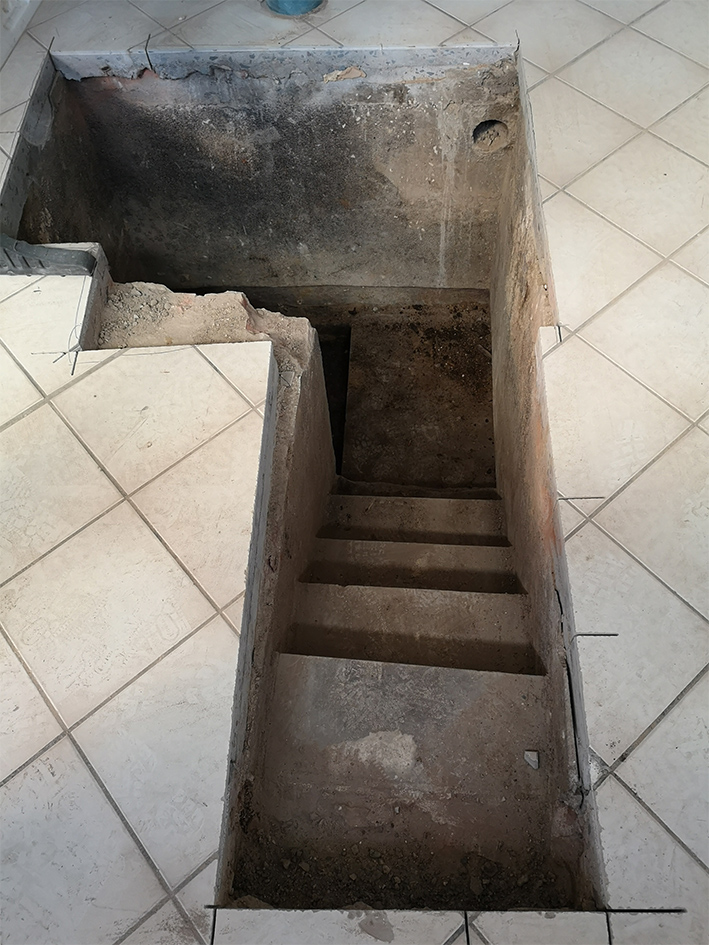
The steps of the Fulda mikveh
Education as a legacy – the reopening of the Torah School
Another milestone in his work was the “Memorandum on Shechita and the Sale of Kosher Meat”, published in 1891, which played a key role in defending the practice of shechita within German Jewry. This document demonstrates Cahn’s commitment to preserving religious traditions at a time of great social upheaval.
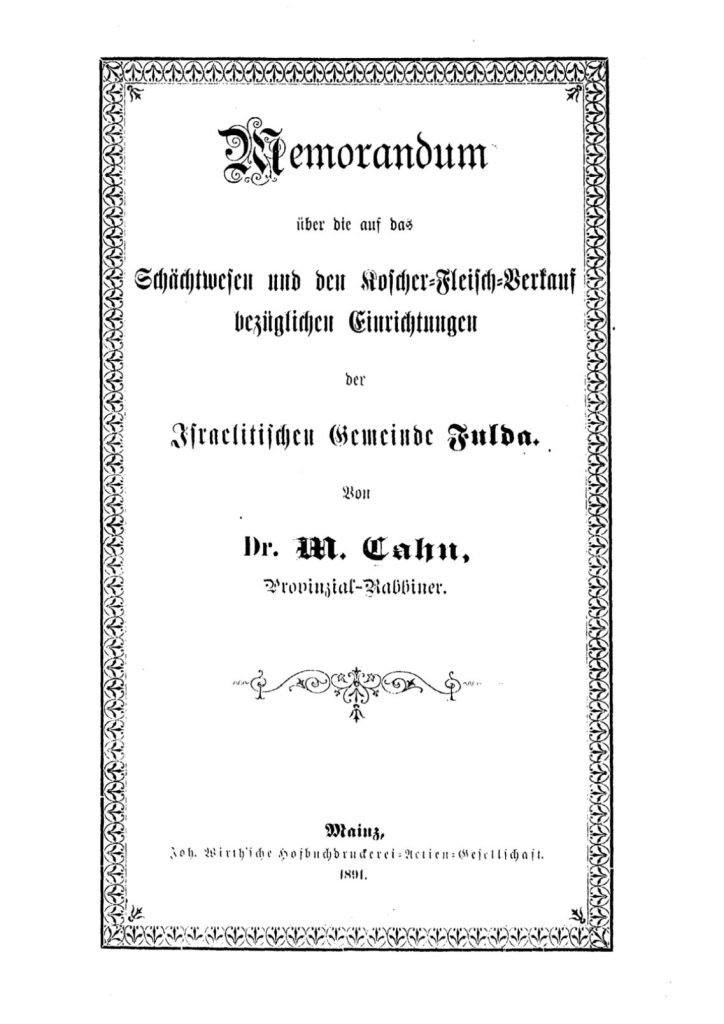
Publication on ritual slaughter, 1891
In 1899, he initiated the reopening of the Beth Hamidrash Torah school in Fulda, which followed in the tradition of the 17th-century rabbi Maharam Schiff. The school was located at Am Stockhaus 4–6 and was an important centre for Jewish education and religious instruction.
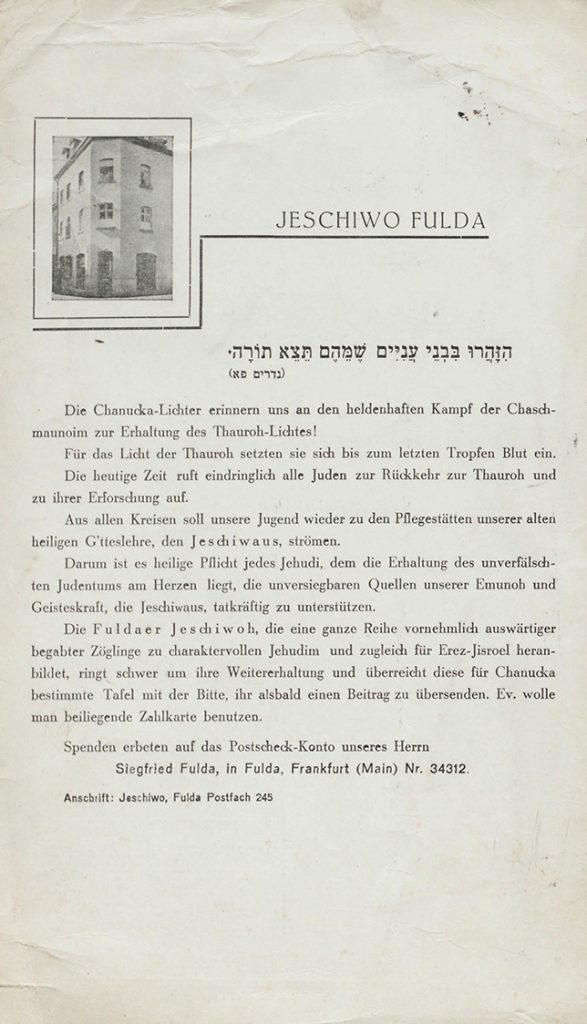
Appeal for donations to preserve the Fulda yeshiva, early 1930s
A life dedicated to serving the community
On the occasion of his 25th anniversary as Provincial Rabbi in 1902, he was honoured with great gratitude and reverence at a ceremonial event. The *Frankfurter Israelitische Familienblatt* praised him as a strict yet compassionate clergyman who worked tirelessly for his congregation. His social commitment was directed in particular towards widows, orphans and the needy.
In 1902–03, Cahn had the Rabbi’s Villa built at 12 Schildeckstraße, which served as a residence for him and his family. Michael Cahn passed away on 1 January 1920. His work left a deep mark on the Jewish community of Fulda and on German Jewry – as a guardian of tradition, education and social responsibility.
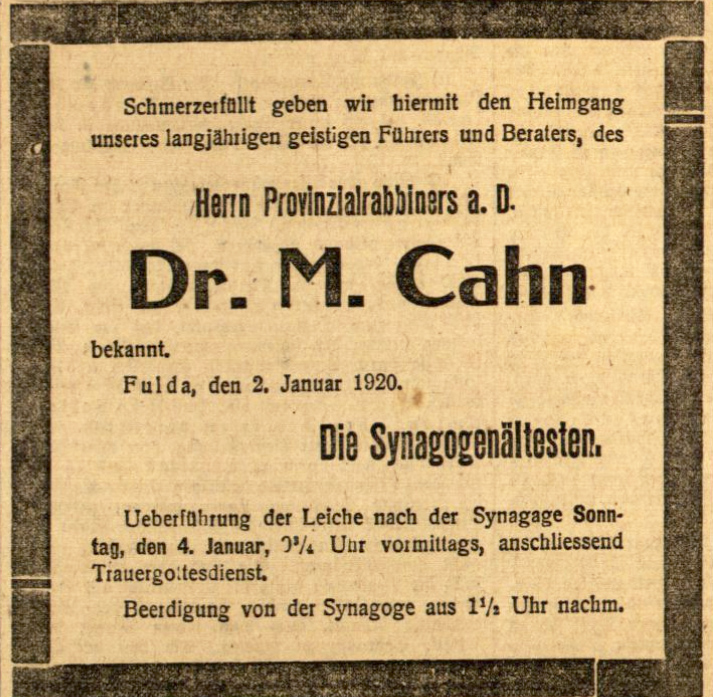
Obituary of Michael Cahn, 1920