
Despite being rescued by a Kindertransport, Eva ultimately died in a concentration camp.
Born on February 13, 1929, in Fulda.
Eva Lehmann grew up with her parents, Leo and Anna, and her younger siblings, Adolf and Clara, at Heinrichstrasse 15. She attended the Jewish school and participated in services at the synagogue, which was destroyed by the Nazis in 1938. After the National Socialists seized power, fear dominated daily life.
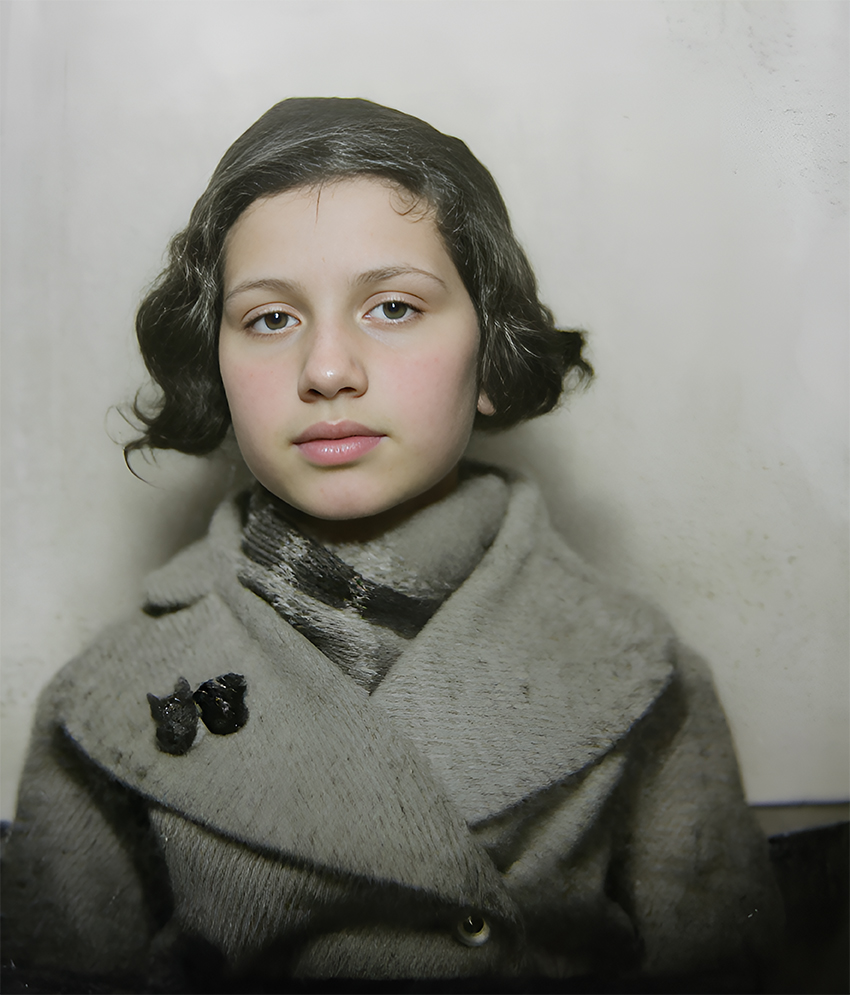
Children's Transport to Belgium
During the November Pogroms of 1938, Eva fled school to escape the stone-throwing and violence. Her father was deported to the Buchenwald concentration camp. In 1939, her parents managed to secure two of the coveted places for Eva and Adolf on a children’s transport to Belgium. There, Eva lived with foster families and in children’s homes. After the German invasion of Belgium in 1940, she returned to Fulda. She found some support within her family, despite the immediate proximity of the Gestapo branch office.
The End of a Family
From September 1941, all Jews aged six and older were required to wear the Star of David, including Eva. On December 8, 1941, the Germans deported the family of five to the Riga Ghetto. Her father died in 1942 in the Salaspils camp; her mother, brother, and sister were murdered in Auschwitz in 1943. Eva was left alone. In 1944, she was deported to the Stutthof concentration camp and murdered there at the age of 15.
Address in Fulda:
Heinrichstr. 15
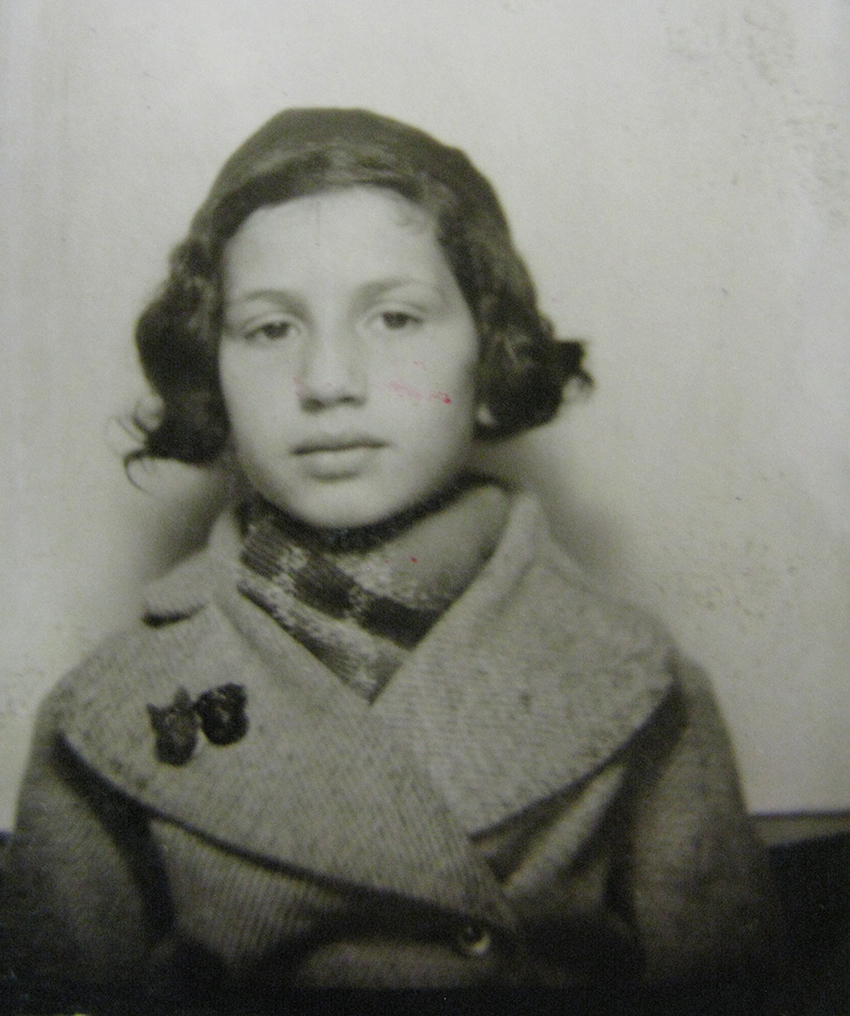
Based on the original photograph shown, all depictions have been reconstructed using artificial intelligence.
A childhood in the shadow of the Gestapo
Eva Lehmann was born on 13 February 1929 in Fulda. She grew up in a loving family with two siblings, Adolf and Clara. Her mother, Anna, worked as a milliner, creating elaborate hats – a profession that demanded creativity and a close relationship with customers. Her father Leo, a veteran of the First World War, provided the family with stability in uncertain times. They lived at 15 Heinrichstraße, directly opposite the branch office of the Secret State Police (Gestapo). From there, the Secret State Police spread surveillance, persecution and terror. For Eva, this meant living with fear and control on a daily basis.
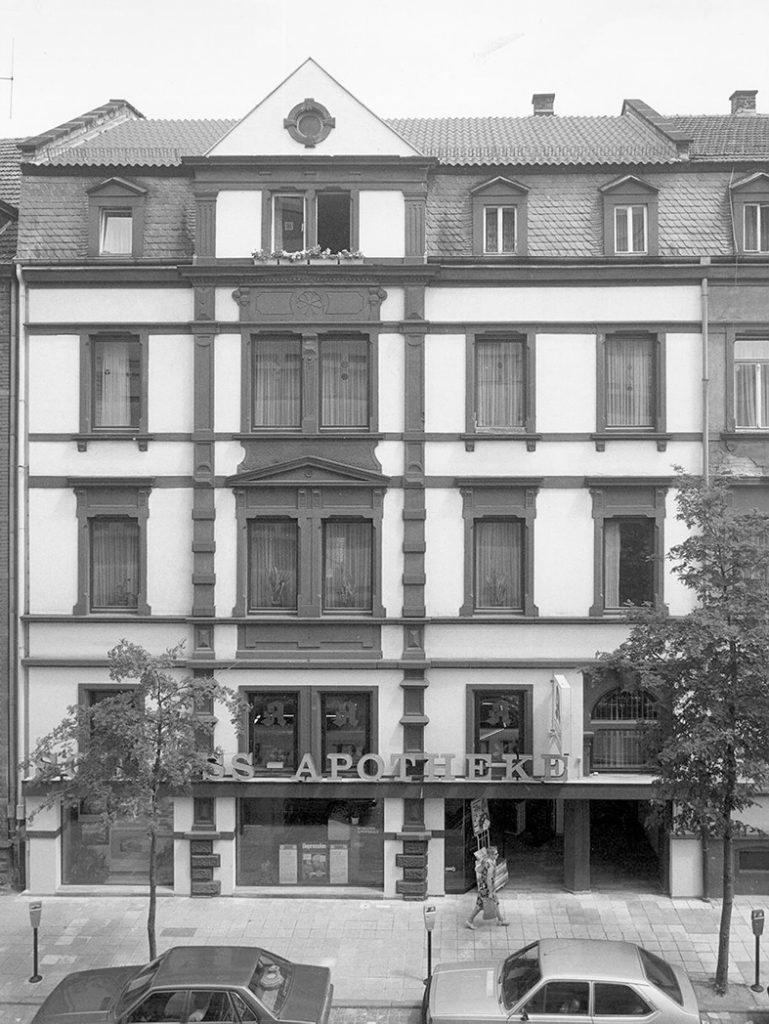
15 Heinrich Street – The Lehmann family lived on the ground floor
The violence of the November pogrom
The November pogrom of 1938 dramatically worsened the situation for Eva. Violent rioters in Fulda ransacked the Jewish school at 13 Schildeckstraße, which Eva attended. Stones smashed the windows, and the children witnessed at close quarters the raw violence and hatred that had suddenly gripped their town. That night marked the beginning of an even more brutal persecution of Jewish people.
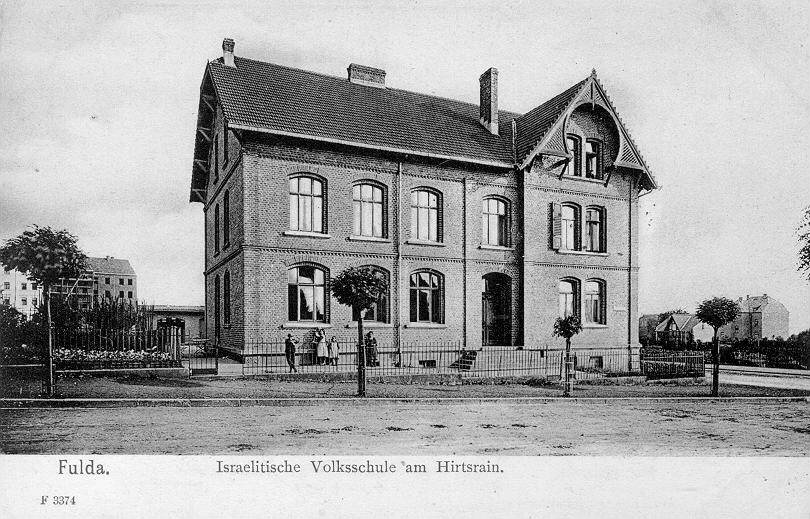
The Jewish primary school – now the headquarters of the Jewish Community
Flight to Belgium
To save children like Eva and Adolf from the growing danger, Jewish and international aid organisations organised the Kindertransports in 1938–39. These rescue operations brought thousands of Jewish children from Germany and the occupied territories to safe countries such as England, the Netherlands, France and Belgium. Eva and her brother were also able to flee and found temporary refuge and hope in Belgium.
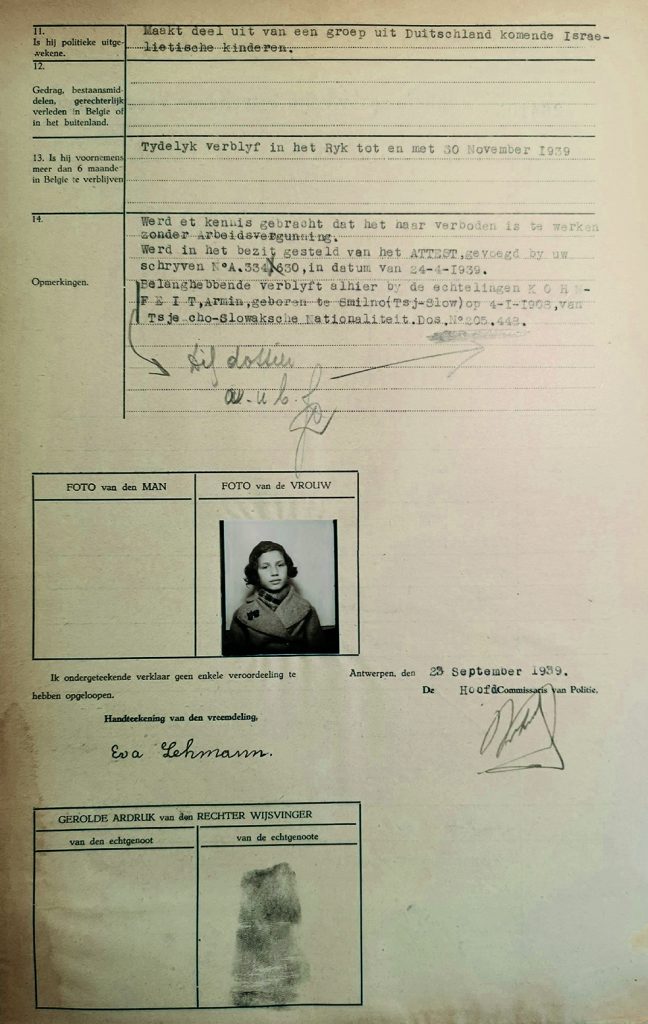
Eva’s signature and fingerprint on the Belgian registration form
From Riga to Stutthof – A life cut short
Following the German invasion of Belgium in May 1940, Eva and Adolf were forced to return to Fulda. On 8 December 1941, the Nazis deported the five-member Lehmann family from Fulda. Her parents and siblings were murdered in 1943; Eva initially survived in the Riga ghetto. In 1944, the Germans deported her from Riga across the Baltic Sea to the Stutthof concentration camp, where she was murdered.
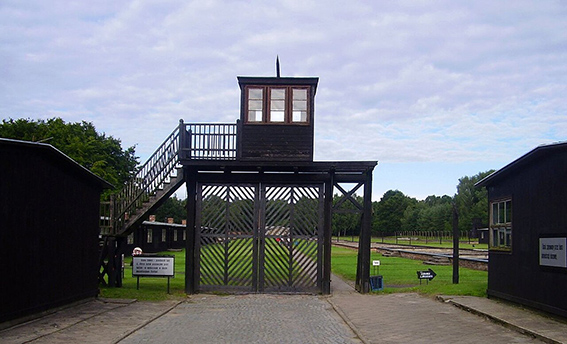
Remains of the watchtower at Stutthof concentration camp
Eva’s story shows just how fragile childhood and family life were in a time marked by fear and persecution. Her life and the fate of the other Jewish children from Fulda serve as a reminder that we must not forget their names and stories.